


Wabasha County is located in Southeastern Minnesota on the Mississippi River. It is considered to be both a part of the Mississippi River Valley, and Mississippi River Bluffs Area. The rich history of this area is evident throughout the county. Prior to 1826, the area of Wabasha was inhabited by the Sioux, led by chief Wa-pa-shaw, who would later give the county and city their names.
The city of Wabasha is the county seat and also Minnesota’s first and longest continuously inhabited River town. Wabasha was first settled in 1826, becoming an officially recognized city in 1830 with the Prairie du Chien Treaty. This makes Wabasha the oldest city in Minnesota.
Wabasha County

On March 3, 1849, during his last hours in office, President James Polk signed a bill adding a new name to the American political landscape, Minnesota Territory. A vast land, it stretched from the St. Croix River and Lake Superior on the east to the Missouri River on the west and north to the Canadian border. Totaling more than 166,000 square miles, Minnesota Territory was divided into nine counties. Wabasha was one of these first counties.
In those feverish years of American expansion, pressure built to organize the lands along the upper Mississippi River. Iowa and Wisconsin had already entered the Union and were rapidly filling with settlers. The story of frontier settlement was soon to be repeated in Minnesota, as a thin stream of farmers, lumbermen, and land speculators turned into a tidal wave.
Farms and towns spread across the prairies. The booming populations, which had grown from less than 5,000 settlers in 1849 to more than 100,000, clamored for statehood. It was granted in 1858, just nine short years after the creation of the territory.
Reads Landing

Founded by Charles R. Read in a location just below where the Chippewa River enters the mighty Mississippi, Reads Landing was the ideal landing spot for trading and riverboat traffic.
In 1856, the village of Reads Landing was platted as Pepin, however the name was never used. It was incorporated March 5,1868 and during the following years flourished with commerce and transportation businesses. Once one of the largest Minnesota communities on the Mississippi River, Reads Landing was home to 27 hotels, 21 saloons, 15 mercantile stores, multiple warehouses; yet only a single church. It was in fact one potential site for the capitol of Minnesota.
Charles R. Read
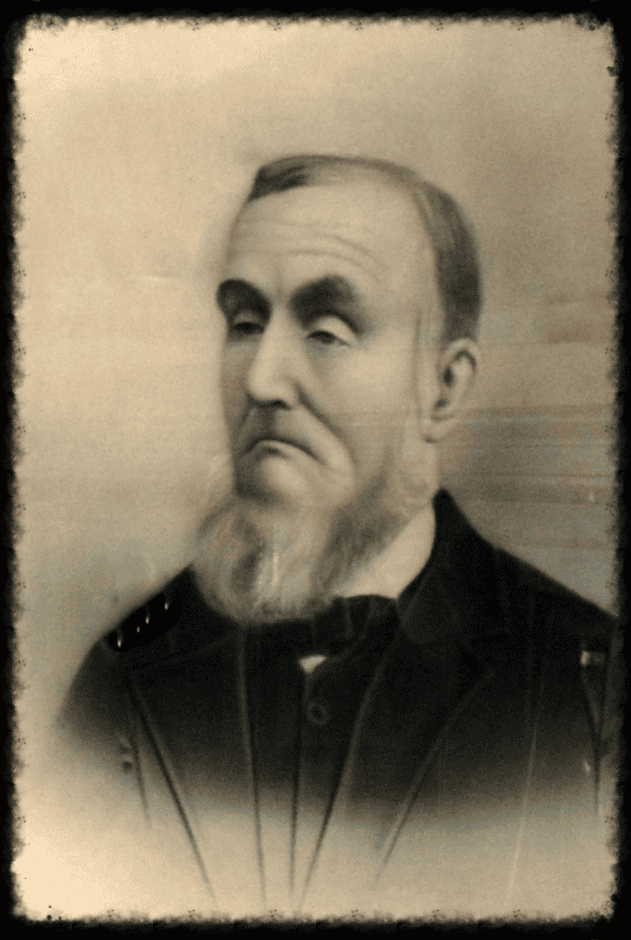
Charles R. Read was born in the parish of Garnsborough, Somersetshire, England, March 20, 1821. Orphaned, he immigrated to Canada with his brother’s family in 1832. At age 16 he came to this country and the following year joined the American invasion during the Canadian rebellion of 1837-38. Taken prisoner, he narrowly escaped hanging and subsequently, due to his young age, had his sentence commuted by Queen Victoria I.
First settling at Nelson’s Landing, just opposite the village named in his honor, he came to Reads Landing in 1847. After that time his history is closely entwined with that of the area. He was county commissioner when the Wabasha County was organized in 1853, became the first chairman of the board of supervisors for Pepin Township, appointed the first Postmaster of Reeds [sic], served as major of the 6th Infantry Regiment from 1861 until 1863, and elected colonel of the 7th regiment, state militia, May 3 1863.
He was married June 7, 1849, at Reads Landing, to Sarah Williamson with whom he had twelve children. Sarah Read died January 2, 1879 and Charles Read died in 1900. Both are buried just south of Reads Landing in Riverview Cemetery.
Luger Furniture Company

The Luger Furniture Company was founded in Dubuque, Iowa in 1857 by Ferdinand and John Luger. In 1861, they opened a small shop in Wabasha, doing furniture handwork. Their market was mostly in the Wabasha area. From this small beginning the business grew from year to year as revenue increased and they were rated the largest furniture manufacturing business in southern Minnesota.
The original shop was found on the east side of Wabasha’s Pembroke Street, just north of the alley between Main and Second Streets. A few years later, they moved a few doors south with a larger shop. From there they moved to the second floor on the north side of Main Street, just west of the Wabasha bank. They occupied most of the second story of the block for manufacturing. The retail salesroom and office were also located on Main Street.
In 1872, a new company complex was built on West Fourth Street bordered by Walnut and Bridge Streets. The manufacturing building was a three-story frame structure. The engine with a boiler building was fueled by the wood waste from the factory. There was also a finishing building and a warehouse. Their products consisted of all kinds of common furniture, chairs and beds being their specialties. Their wood supplies of maple, butternut, oak, elm and basswood came from the Chippewa River Valley in Wisconsin. The walnut wood came from Iowa.
One of their markets for furniture was in the Fargo, North Dakota area, where they had a warehouse and sales office. They also had a sales office in Moorhead, Minnesota. In 1884, their annual revenues were $250,000 and using a 2.49% annual average inflation rate, it would be $8,051,000 in 2025 dollars.
In 1887, they constructed a large office and manufacturing complex in North St. Paul, Minnesota and moved the entire company there along with sixty employees and their families. In 1957, the company went out of business.